There’s an old saying that has been running through my mind lately:
A stitch in time saves nine.
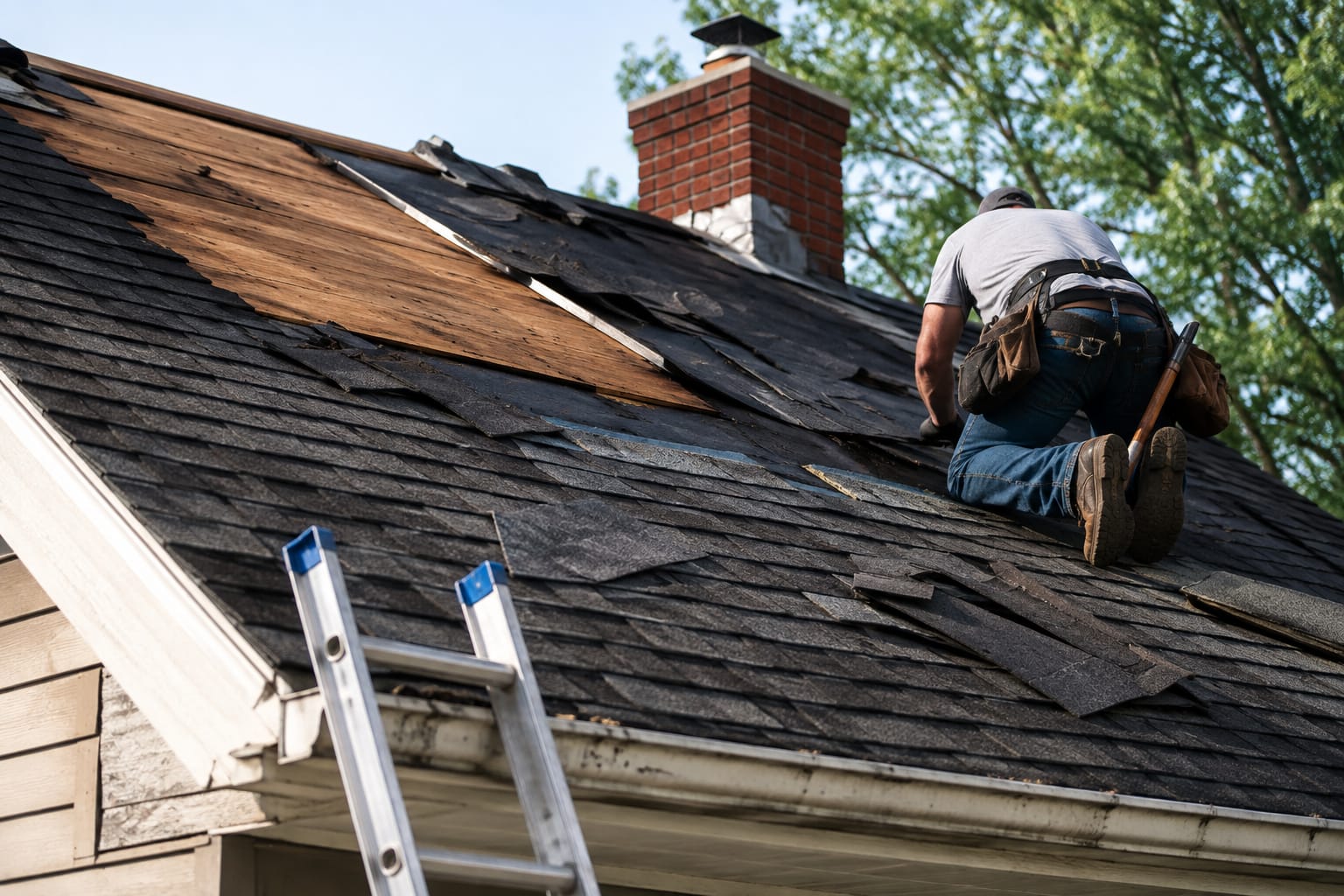
Over the past month, I’ve had the opportunity to see the condition of many homes while serving on property assessment appeals. One thing has stood out to me again and again: what can happen to a house when a roof problem is allowed to continue.
I’ve seen homes where water intrusion was no longer simply a roofing issue. By the time the damage was visible throughout the house, it had affected ceilings, walls and other building materials.
It has reinforced something I already knew from years around real estate and property inspections:
A roof repair is one of those home expenses that usually does not get less expensive by waiting.
The Roof Is Protecting Much More Than the Attic
It’s easy to think about a roof as shingles, slate or metal sitting on top of a house.
But the roof is really the first line of defense for almost everything underneath it.
Once water gets through that protective layer, it may reach roof sheathing, rafters, insulation, plaster or drywall, ceilings, walls and finishes. Depending on where the water travels, the visible stain inside the house may not even be directly beneath the actual roof leak.
And water can be remarkably patient.
A small leak doesn’t necessarily announce itself by pouring water into the living room. It may begin with a little moisture in the attic, staining around a chimney, damp insulation or discoloration on a ceiling.
That is the stage when you want to find it.
A Small Roof Problem Can Become a House Problem
This is where the economics of home maintenance become important.
Imagine discovering a roofing problem and getting an estimate that makes you wince.
It’s understandable to think:
Maybe I can wait another year.
But if the roof is actively allowing water into the house, you’re no longer simply deciding when to replace or repair a roof.
You’re gambling with everything underneath it.
Continued moisture can damage insulation and interior finishes. Wood components can deteriorate. Drywall or plaster may need to be removed and replaced. Paint and trim can be damaged. Persistent moisture can also create conditions that allow mold to grow.
The U.S. Environmental Protection Agency emphasizes that moisture control is the key to controlling mold and recommends drying wet or damp materials within 24 to 48 hours whenever possible.
In other words, time matters when water gets into a house.
Sometimes the Expensive Choice Is Waiting
I’m naturally cautious about telling anyone to borrow money. Debt has a cost, and every homeowner’s financial situation is different.
But there are certain home repairs where the cost of not addressing the problem deserves to be part of the calculation.
An actively leaking roof is one of them.
If a homeowner has a known roof failure but doesn’t have enough cash available for the repair, it may be worth talking with a financial professional about responsible options rather than automatically postponing the work.
Yes, borrowing money means paying interest.
But interest on a necessary repair could potentially be far less costly than eventually paying for the roof plus damaged sheathing, insulation, ceilings, walls, mold remediation or other deterioration caused by continued water intrusion.
That’s the part of the equation homeowners sometimes miss.
The choice isn’t always:
Spend money now or spend money later.
Sometimes it’s:
Spend money on the original problem now — or risk spending considerably more repairing the consequences later.
Pay Attention to the Little Clues
Roof problems aren’t always obvious from the ground.
Inside the house, watch for things such as water stains on ceilings or walls, peeling or bubbling paint, damp or discolored areas in the attic, musty odors or stains that appear or become larger after rain.
Outside, missing or damaged shingles, deteriorated flashing, problems around chimneys and roof penetrations, sagging areas, or gutters that aren’t properly moving water away from the house deserve attention.
A stain doesn’t necessarily tell you exactly what’s wrong. It tells you it’s time to investigate.
And if you know the roof has leaked, painting over the stain isn’t fixing the problem.
Find the source first.
Older Lancaster Homes Deserve Particular Attention
This is especially relevant in Lancaster County, where we have such a wonderful collection of older homes.
An older home may have plaster walls and ceilings, multiple roof sections, additions constructed at different times, chimneys, dormers, valleys, slate roofing or other details that make tracing water intrusion more complicated.
That doesn’t make an older house a bad house.
It simply makes maintenance important.
The same principle applies whether you’re caring for a Lancaster City rowhome, an old farmhouse in the countryside or a 30-year-old suburban home.
Keep the water out.
It is one of the most basic rules of preserving a building.
Don’t Wait for the Bucket
You don’t need to panic over every aging roof or ceiling stain. A qualified roofing professional can help determine whether you’re looking at a relatively small repair, maintenance issue or a roof nearing the end of its useful life.
But an active leak deserves attention.
The homes I’ve seen recently have been a powerful reminder that deferred maintenance has a way of compounding. Sometimes homeowners are trying to save money by waiting, only to discover that waiting created an entirely new set of repairs.
So if there’s one home-maintenance lesson worth remembering, perhaps it really is the old one:
A stitch in time saves nine.
Fixing the small opening that is letting water into your home may feel expensive today.
Fixing everything that water reaches can be much more expensive tomorrow.
Sources & Further Reading
The U.S. Environmental Protection Agency provides homeowner guidance on moisture and mold prevention and recommends addressing water problems promptly and drying water-damaged materials quickly.
The U.S. Department of Housing and Urban Development also publishes guidance regarding moisture-resistant homes and the importance of addressing roof and water-intrusion problems.
This article is intended as general educational information about homeownership and property maintenance. Roofing conditions vary, and homeowners should consult qualified roofing, building, remediation and financial professionals as appropriate.
Leave a Reply