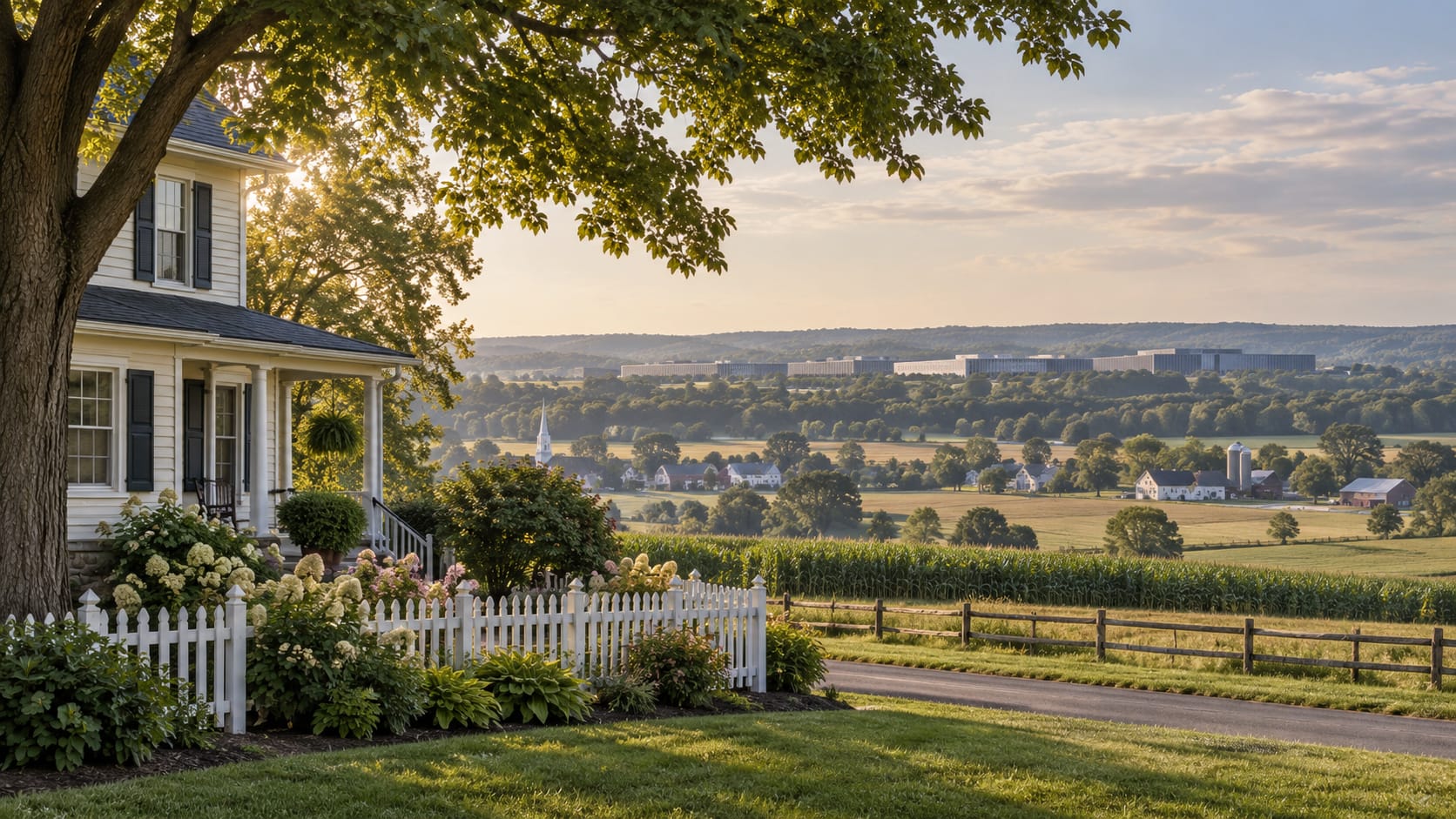
Data Centers in Lancaster County: Questions Worth Asking Before We Decide
By Sandra Burkholder
When I read about Columbia Borough residents speaking up as their council considers data center regulations, I understood why they came to the meeting. A large building near your home can change the view, the sound, and the feel of a place you love. I also found myself thinking about what happens to a community when new businesses don’t come.
I’ve worked with business owners and company leaders for many years, and I work with people making deeply personal decisions about where to live. Those experiences make it hard for me to see this as a simple argument with one good side and one bad side.
I grew up in a rural part of northern Pennsylvania. Over the decades, I’ve watched that area decline economically. Few businesses came in. Many people commute a long way to work. Small local businesses struggle to survive, apart from a handful of places such as pizza shops and gas stations. A community needs people willing to invest in it. It needs commerce, jobs, and a reason for the next generation to see a future there.
Investment in Lancaster County can be a good thing. I don’t want us to overlook that because a proposed use is unfamiliar or unpopular.
But I’m also a residential real estate agent. I know how much thought can go into choosing a home. Someone may fall in love with a beautiful house, its quiet setting, and the view beyond the white picket fence. It’s entirely reasonable for that person to worry about a large, noisy industrial building changing the landscape behind it.
And while data centers support technology many of us use, that doesn’t mean every neighbor welcomes that technology or wants its infrastructure nearby. They still deserve a clear account of what is proposed and how it will affect their daily lives.
So how do we make room for growth while caring for the people who already call a place home?
As a mom, I’m familiar with competing needs under one roof. One child wants quiet; another needs attention. We don’t always find a perfect answer. We do better when everyone has a chance to be heard and when we deal with what is actually happening, instead of promising that everything will somehow work out.
I think that’s a useful approach to development, too. Before a community accepts or rejects a proposal, it should have honest answers to practical questions:
- Where would the buildings, cooling equipment, and generators sit in relation to nearby homes?
- What would residents hear at night, and how would noise limits be measured and enforced?
- How much electricity and water would the facility need?
- Who would pay for any infrastructure upgrades?
- How many permanent jobs and how much local tax revenue could reasonably be expected?
- What other uses are realistically possible on that particular property?
The last question matters. It’s tempting to say, “A factory or warehouse could be worse.” Maybe one could be. Another business might bring more jobs. We can’t compare a real proposal with an imaginary best or worst case and call that a careful decision.
Columbia Borough’s current discussion is about setting regulations for possible future data centers. Residents have raised concerns about size, noise, power use, heat, and environmental effects. Those concerns belong in the conversation while the rules are being written, before anyone is asked to live with the outcome.
I keep coming back to a picture of family life. Sometimes a new baby brother arrives with colicky cries that seem to fill the whole house. We love him and make room for him, but we also pay attention to where he sleeps, when everyone else needs rest, and how the household will manage.
A development project isn’t a child, of course. We have far more say in where, when, and how it enters our community. That’s why I want specifics. Don’t promise the world and fail to deliver. Don’t ask residents to put on rose-colored glasses. And don’t assume that every new business is a threat before we’ve examined what it will actually bring.
Lancaster County can welcome investment and still insist that new development be a good neighbor. Getting there takes clear plans, realistic comparisons, enforceable commitments, and the willingness to listen to the people whose homes are closest.
That may be imperfect common ground. It’s still worth working toward.
Sandra Burkholder is a Lancaster County real estate advisor. These are her personal views on land use and community development.
Leave a Reply